logo
전화 번호:
Tellhow Technology (Chongqing) Co., Ltd.
저희 모터로 에너지를 절약하고 성공을 이루세요!
블로그

Threephase Synchronous Motors Powering EV Innovation

제가 지금 온라인 채팅 해요
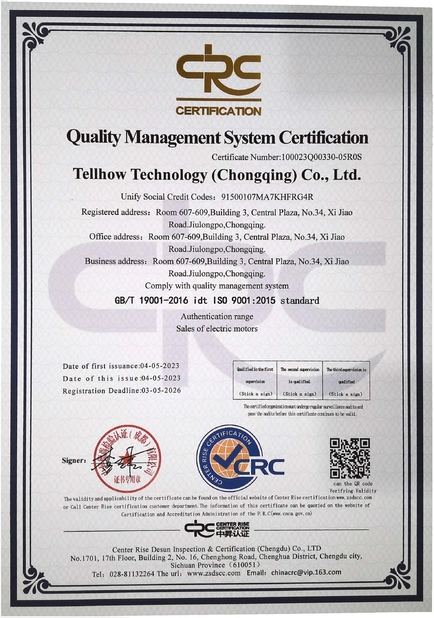
인증
중국 Tellhow Technology (Chongqing) Co., Ltd. 인증
고객 검토
모터는 저소음으로 완전히 운영하고 비디오 원격 설치 안내 서비스가 우수합니다. 우리의 지도자들은 매우 충족합니다.

—— 미샤 글래더쉬첸코

공장은 기술에 대해 매우 혹독하고 심각하고, 우리의 사용 환경에 따라 모터에 대한 세부를 조정하기 위한 매우 과학적 제안을 할 수 있습니다. 이것은 매우 믿을 만한 회사입니다.

—— 최근 미사용 리즈키 아말리아

회사 블로그
Threephase Synchronous Motors Powering EV Innovation
에 대한 최신 회사 뉴스 Threephase Synchronous Motors Powering EV Innovation

Have you ever wondered what powers the silent yet swift electric vehicles gliding through our streets? The answer often points to an engineering marvel—the three-phase synchronous motor. More than just an application of AC motor technology, it represents the perfect fusion of electromagnetic principles and mechanical design, propelling us toward an electrified future.

1. Principles and Construction: The Building Blocks of Tomorrow

As a distinguished member of the three-phase AC motor family, synchronous motors play a pivotal role in electric and hybrid vehicles. Beyond transportation, they serve as the backbone of power generation—whether hydroelectric, thermal, or nuclear. Understanding their fundamental principles is crucial for grasping the future of motor technology and energy systems.

1.1 Core Principles: The Synchronous Dance

By definition, a three-phase synchronous motor is "an AC motor that rotates in sync with the rotating magnetic field generated by three-phase alternating current." This concise statement encapsulates profound physics and engineering:

  • Three-phase AC: The energy source consisting of three sinusoidal currents offset by 120 electrical degrees, creating the essential rotating magnetic field.
  • Rotating magnetic field: Achieved through strategic stator winding arrangements powered by three-phase current.
  • Synchronous rotation: The rotor's speed precisely matches the stator's magnetic field rotation—a hallmark feature enabling superior efficiency and control.

The motor's operation fundamentally involves stator-generated rotating magnetic fields interacting with rotor elements to produce synchronized motion. This requires two primary components:

  • Stator: The stationary part housing three-phase windings that create the rotating magnetic field.
  • Rotor: The rotating component synchronized by the magnetic field, typically using permanent magnets or field windings.

1.2 Structural Ingenuity: Precision Engineering

Every design element optimizes performance and reliability:

Stator Windings: Architects of Rotation

Three independent coils—each corresponding to a phase—are wound with 120° offsets. When powered by sinusoidal currents, they generate a uniform rotating magnetic field that acts as a virtual rotating magnet.

Rotor (Permanent Magnet): Persistent Magnetic Force

Permanent magnet rotors offer distinct advantages:

  • Eliminate external excitation needs
  • Deliver high power density
  • Enable rapid response times

N-S magnet arrays ensure effective interaction with the rotating field.

Critical Stator Components

The stator core—laminated silicon steel sheets with insulation—provides low-reluctance magnetic paths while minimizing eddy currents. Windings use precisely arranged insulated conductors to generate optimal magnetic fields.

Rotor Essentials: Permanent Magnet Advantages

Material selection (e.g., NdFeB, SmCo) and pole count determine magnetic strength and torque characteristics.

2. Operational Mechanics: The Physics of Rotation

Synchronous operation relies on fundamental electromagnetic interactions:

2.1 Coil Flux Generation: Electromagnetic Foundations

Current through stator coils generates magnetic flux via the right-hand rule. Though coils remain stationary, phased current control creates effective rotational flux around the rotor.

2.2 Magnetic Field Interaction: The Synchronous Dance

The stator's rotating magnetic field—acting as a virtual magnet—attracts rotor poles, maintaining perfect speed synchronization through continuous N-S attraction.

2.3 Torque Generation: The Power of Misalignment

When perfectly aligned, magnetic forces balance without rotation. Slight misalignment creates torque that pulls the rotor into synchronization, with torque magnitude proportional to angular displacement.

3. Armature Reaction: The Internal Balancing Act

Rotating rotors induce counter-electromotive force in stator windings, modifying the original magnetic field—a phenomenon called armature reaction that significantly impacts performance.

3.1 Resistive Loads (Unity Power Factor): Cross-Magnetization

Current-voltage alignment creates field distortion—strengthening some regions while weakening others—potentially reducing efficiency.

3.2 Inductive Loads (Lagging Power Factor): Magnetizing Effect

Current lagging voltage by 90° enhances the main field, increasing flux but risking magnetic saturation.

3.3 Capacitive Loads (Leading Power Factor): Demagnetizing Effect

Current leading voltage by 90° weakens the main field, reducing torque capacity and potentially causing desynchronization.

3.4 Generator Operation: Inverse Effects

In synchronous generators, inductive loads cause demagnetization while capacitive loads produce magnetization—critical considerations for power system stability.

4. Analytical Tools: Equivalent Circuits and Phasor Diagrams

Advanced analysis employs mathematical modeling techniques:

4.1 Equivalent Circuit (Per-Phase): Simplified Representation

The model comprises:

  • Terminal voltage (V)
  • Back EMF (E)
  • Synchronous reactance (Xs)
  • Armature resistance (Ra)

Voltage relationship: V = (Ra + jXs)I + E describes operational dynamics.

4.2 Phasor Diagrams: Visualizing Performance

Vector representations clarify voltage-current-phase relationships, showing:

  • Terminal voltage (reference vector)
  • Armature current (phase angle Θ)
  • Resistive (Ra×I) and reactive (jXs×I) voltage drops
  • Back EMF (load angle δ)

5. Conclusion: Mastering Core Technology for an Electrified Future

From fundamental principles to complex electromagnetic phenomena, three-phase synchronous motors represent a cornerstone of modern electrification. As these technologies continue evolving, deeper understanding of their design and operation will prove invaluable for engineers and technologists shaping our energy future.

선술집 시간 : 2026-06-11 00:00:00 >> 블로그 목록
연락처 세부 사항
Tellhow Technology (Chongqing) Co., Ltd.

담당자: Mr. Alex Yip

전화 번호: +86 2386551944

회사에 직접 문의 보내기
Tellhow Technology (Chongqing) Co., Ltd.
3, 센트럴 플라자, No.34, 시 지아오 길을 건설하는 607-609. 충칭. 중국
전화 번호:86-155-23661144
모바일 사이트 개인 정보 정책 | 중국 좋은 품질 고전압 교류 전동기 협력 업체. © 2022 - 2026 Tellhow Technology (Chongqing) Co., Ltd.. All Rights Reserved.