logo
전화 번호:
Tellhow Technology (Chongqing) Co., Ltd.
저희 모터로 에너지를 절약하고 성공을 이루세요!
블로그

Solar Pumps Cut Costs for Well Water Systems

제가 지금 온라인 채팅 해요
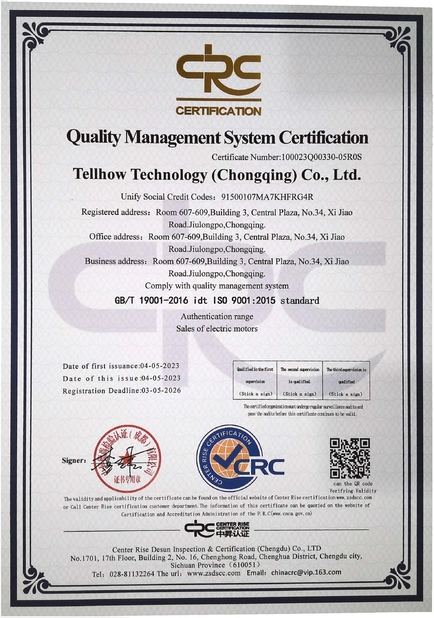
인증
중국 Tellhow Technology (Chongqing) Co., Ltd. 인증
고객 검토
모터는 저소음으로 완전히 운영하고 비디오 원격 설치 안내 서비스가 우수합니다. 우리의 지도자들은 매우 충족합니다.

—— 미샤 글래더쉬첸코

공장은 기술에 대해 매우 혹독하고 심각하고, 우리의 사용 환경에 따라 모터에 대한 세부를 조정하기 위한 매우 과학적 제안을 할 수 있습니다. 이것은 매우 믿을 만한 회사입니다.

—— 최근 미사용 리즈키 아말리아

회사 블로그
Solar Pumps Cut Costs for Well Water Systems
에 대한 최신 회사 뉴스 Solar Pumps Cut Costs for Well Water Systems

Imagine turning on your faucet in the morning only to be greeted by murky, untreated well water. For over 43 million Americans who rely on private wells, this isn't a hypothetical scenario but a daily reality. Unlike municipally treated water supplies, the safety of well water depends largely on the homeowner's purification efforts—with modern well pumps serving as critical equipment for maintaining clean water access. However, the electricity consumption of these pumps directly impacts both operational costs and energy efficiency.

Well Pump Power Consumption: Key Data and Influencing Factors

A well pump's energy usage isn't fixed but varies based on several factors. Understanding these variables helps homeowners select the most appropriate pump model while avoiding unnecessary energy waste.

  • Typical Power Range: Most household well pumps average between 700 and 800 watts, though specific models and applications may require up to 5,000 watts.
  • Key Influencing Factors:
    • Pump Type: Different pump designs have varying power requirements. Submersible pumps, while versatile for various well depths, typically demand more power to overcome water pressure and friction compared to surface pumps.
    • Well Depth: Deeper wells require more energy to lift water against gravity, making depth a crucial consideration when selecting an energy-efficient pump.
    • Pump Size and Water Demand: Larger pumps deliver greater water flow but consume more electricity. Proper sizing based on actual water needs prevents energy waste.
    • Pump Efficiency: Energy efficiency ratings significantly impact long-term operating costs. Higher efficiency models perform the same work with less electricity.
Horsepower Conversion and Selection Guide

Well pumps typically specify power in horsepower (HP) rather than watts. Understanding the conversion helps accurately assess energy requirements.

  • Conversion: 1 HP ≈ 746 watts
Pump Motor Size (HP) Starting Power (Watts) Running Power (Watts)
0.33 HP 1,500 - 2,400 750 - 800
0.5 HP 1,800 - 3,150 900 - 1,050
0.75 HP 3,000 - 5,400 1,500 - 1,800
1 HP 4,000 - 7,200 2,000 - 2,400
1.5 HP 5,000 - 8,400 2,500 - 2,800
2 HP 7,500 - 12,000 3,750 - 4,000
3 HP 10,000 - 16,500 5,000 - 5,500
5 HP 15,000 - 24,000 7,500 - 8,000
7.5 HP 20,000 - 33,000 10,000 - 11,000
10 HP 30,000 - 48,000 15,000 - 16,000

Note: Starting power requirements significantly exceed running power—a critical consideration when selecting backup power sources like generators or solar systems.

Calculating Operational Costs: Quantifying Electricity Expenses

Understanding pump power consumption ultimately helps homeowners quantify operating costs and identify savings opportunities.

  • Calculation Method:
    1. Determine pump wattage from manufacturer specifications
    2. Estimate daily operating hours (using timers or manual tracking)
    3. Calculate daily consumption: watts × hours ÷ 1000 = kWh
    4. Multiply by days per month for monthly kWh
    5. Multiply by local electricity rate for monthly cost
  • Example: An 800-watt pump running 8 hours daily at $0.12/kWh:
    • Daily: 800 × 8 ÷ 1000 = 6.4 kWh
    • Monthly: 6.4 × 30 = 192 kWh
    • Cost: 192 × 0.12 = $23.04
Solar Power: An Eco-Friendly Alternative

With rising electricity prices and growing environmental awareness, solar-powered well pumps present an increasingly viable solution.

  • Advantages:
    • Reduced operating costs through free solar energy
    • Environmentally clean operation with zero emissions
    • Off-grid capability for remote locations
    • Increased energy independence
  • System Requirements:
    • Solar panel output must exceed pump starting/running power
    • Battery storage for nighttime/cloudy day operation
    • Inverter for DC-to-AC conversion
    • Controller for system management
Conclusion

Accurately assessing well pump energy consumption represents the first step toward reducing operating costs and improving efficiency. By carefully considering pump type, well depth, sizing, and efficiency ratings, homeowners can select optimal equipment. Exploring renewable energy solutions like solar power offers both economic and environmental benefits—delivering clean water while achieving cost savings and sustainability.

선술집 시간 : 2026-02-10 00:00:00 >> 블로그 목록
연락처 세부 사항
Tellhow Technology (Chongqing) Co., Ltd.

담당자: Mr. Alex Yip

전화 번호: +86 2386551944

회사에 직접 문의 보내기
Tellhow Technology (Chongqing) Co., Ltd.
3, 센트럴 플라자, No.34, 시 지아오 길을 건설하는 607-609. 충칭. 중국
전화 번호:86-155-23661144
모바일 사이트 개인 정보 정책 | 중국 좋은 품질 고전압 교류 전동기 협력 업체. © 2022 - 2026 Tellhow Technology (Chongqing) Co., Ltd.. All Rights Reserved.