logo
전화 번호:
Tellhow Technology (Chongqing) Co., Ltd.
저희 모터로 에너지를 절약하고 성공을 이루세요!
블로그

Modern Grids Rely on Synchronous Generators for Efficiency

제가 지금 온라인 채팅 해요
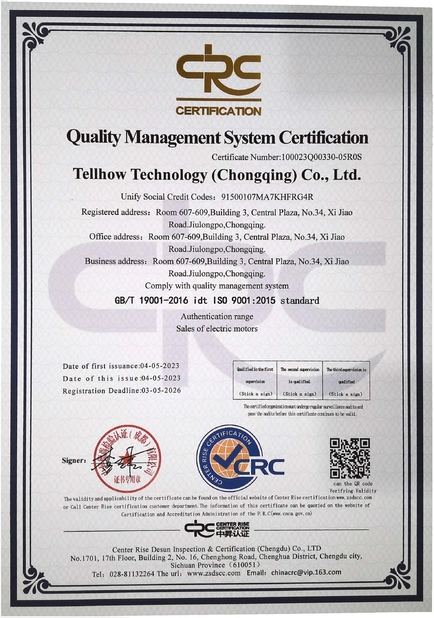
인증
중국 Tellhow Technology (Chongqing) Co., Ltd. 인증
고객 검토
모터는 저소음으로 완전히 운영하고 비디오 원격 설치 안내 서비스가 우수합니다. 우리의 지도자들은 매우 충족합니다.

—— 미샤 글래더쉬첸코

공장은 기술에 대해 매우 혹독하고 심각하고, 우리의 사용 환경에 따라 모터에 대한 세부를 조정하기 위한 매우 과학적 제안을 할 수 있습니다. 이것은 매우 믿을 만한 회사입니다.

—— 최근 미사용 리즈키 아말리아

회사 블로그
Modern Grids Rely on Synchronous Generators for Efficiency
에 대한 최신 회사 뉴스 Modern Grids Rely on Synchronous Generators for Efficiency

In the intricate architecture of modern power systems, synchronous generators serve as the backbone of electricity production. These sophisticated machines transform mechanical energy into the electrical power that fuels our daily lives, operating with remarkable efficiency and reliability that makes them indispensable to contemporary infrastructure.

1. The Dominance of Synchronous Generators

Three-phase synchronous generators dominate global power generation, with units ranging from hundreds to 1,500 MVA in capacity. A single 1,500 MVA generator can power over half of a mid-sized city's electrical needs, demonstrating their critical role in energy infrastructure.

Key operational characteristics include:

  • Parallel operation: Multiple units often work in tandem, with 600 MVA generators being common in large plants
  • Market share: Accounting for over 70% of global generator installations
  • Efficiency: Modern units achieve up to 99% energy conversion rates
2. Core Components and Operation

The generator's architecture comprises two primary elements:

  • Rotor: An iron core with DC excitation windings creating the magnetic field
  • Stator: Stationary three-phase windings where electricity is induced

The precise air gap between these components significantly impacts performance, with advanced finite element analysis optimizing this critical interface.

3. Generator Variants: Steam vs. Hydro

Two principal designs serve different applications:

  • Steam turbine generators: Cylindrical rotors operating at 3,000-3,600 RPM, typically in thermal plants
  • Hydroelectric generators: Salient pole rotors running at lower speeds for water-driven systems

The choice between designs involves trade-offs in rotational speed, pole configuration, and mechanical stress considerations.

4. Fundamental Operating Principles

The relationship between rotational speed and electrical frequency follows:

f = (n × p)/60

Where frequency (f) in Hertz equals rotor speed (n) in RPM multiplied by pole pairs (p), divided by 60. This synchronization ensures stable grid integration.

5. Thermal Management Challenges

Despite 99% efficiency, a 600 MW generator still dissipates 6 MW as heat. Advanced cooling systems utilize:

  • Hydrogen (7× air's thermal capacity)
  • Water (12× air's thermal capacity)

Thermodynamic modeling optimizes cooling strategies to protect sensitive insulation materials.

6. Grid Synchronization Requirements

Successful interconnection demands four precise conditions:

  • Matching phase sequence
  • Identical frequency
  • Equal voltage magnitude
  • Phase alignment

Automated control systems continuously adjust generator output to maintain these parameters.

7. Electrical Modeling and Analysis

The simplified equivalent circuit represents synchronous reactance (X) as the primary impedance, with stator resistance typically neglected for steady-state analysis. This model enables:

  • Performance prediction
  • Fault current estimation
  • Stability assessments
8. Power Regulation Mechanics

Increased steam input doesn't accelerate grid-connected generators due to the infinite bus effect. Instead:

  • Additional mechanical torque increases power angle (δ)
  • Internal voltage (E) leads terminal voltage (V)
  • Excess energy converts to electrical output

This behavior resembles an elastic coupling between prime mover and grid.

9. Power Flow Equations

Key relationships govern electrical behavior:

I = (E - V)/(jX)

S = 3 × V × I* = P + jQ

These formulas describe current flow and complex power delivery to the system.

10. Future Evolution

Emerging technologies promise to enhance synchronous generators through:

  • Smart monitoring systems
  • Advanced materials
  • Improved cooling techniques
  • Digital twin simulations

These innovations aim to maintain synchronous generators' central role amid changing energy landscapes.

선술집 시간 : 2026-04-06 00:00:00 >> 블로그 목록
연락처 세부 사항
Tellhow Technology (Chongqing) Co., Ltd.

담당자: Mr. Alex Yip

전화 번호: +86 2386551944

회사에 직접 문의 보내기
Tellhow Technology (Chongqing) Co., Ltd.
3, 센트럴 플라자, No.34, 시 지아오 길을 건설하는 607-609. 충칭. 중국
전화 번호:86-155-23661144
모바일 사이트 개인 정보 정책 | 중국 좋은 품질 고전압 교류 전동기 협력 업체. © 2022 - 2026 Tellhow Technology (Chongqing) Co., Ltd.. All Rights Reserved.