logo
전화 번호:
Tellhow Technology (Chongqing) Co., Ltd.
저희 모터로 에너지를 절약하고 성공을 이루세요!
블로그

Key Motor Selection Tips for VFD Performance Efficiency

제가 지금 온라인 채팅 해요
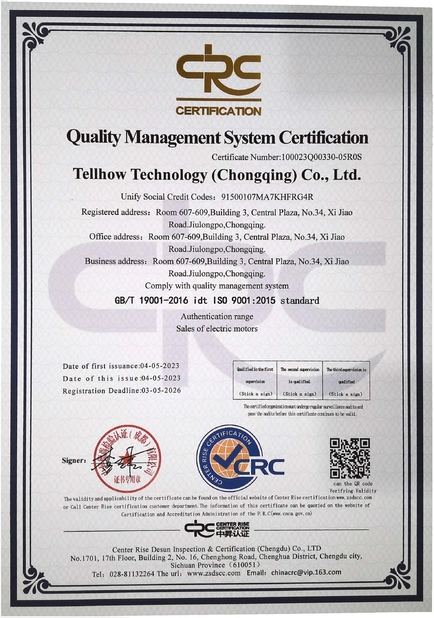
인증
중국 Tellhow Technology (Chongqing) Co., Ltd. 인증
고객 검토
모터는 저소음으로 완전히 운영하고 비디오 원격 설치 안내 서비스가 우수합니다. 우리의 지도자들은 매우 충족합니다.

—— 미샤 글래더쉬첸코

공장은 기술에 대해 매우 혹독하고 심각하고, 우리의 사용 환경에 따라 모터에 대한 세부를 조정하기 위한 매우 과학적 제안을 할 수 있습니다. 이것은 매우 믿을 만한 회사입니다.

—— 최근 미사용 리즈키 아말리아

회사 블로그
Key Motor Selection Tips for VFD Performance Efficiency
에 대한 최신 회사 뉴스 Key Motor Selection Tips for VFD Performance Efficiency

Imagine investing significant capital in a variable frequency drive (VFD), only to discover it's incompatible with your existing motor—resulting in subpar performance or even complete failure. This scenario occurs more frequently than one might expect. The relationship between motors and VFDs resembles precision gear meshing; even minor mismatches can lead to substantial consequences. Poor selection can range from reduced efficiency to catastrophic equipment damage with significant financial losses. How can one navigate these challenges to achieve optimal performance from this critical pairing?

This comprehensive guide examines compatibility issues between VFDs and various motor types, providing detailed selection criteria to facilitate informed decision-making while maximizing efficiency and cost-effectiveness.

I. Optimal Motor-VFD Pairings: Which Motors Work Best With VFDs?

VFDs, as their name suggests, regulate motor speed by modifying power frequency. Functioning as sophisticated conductors, they orchestrate motor operation by dynamically adjusting rotational speed according to operational requirements, thereby achieving energy conservation and performance enhancement.

Which motor types respond effectively to this technological conductor?

Generally, VFDs demonstrate optimal compatibility with alternating current (AC) motors, particularly induction motors. Under specific conditions, synchronous and permanent magnet motors can also form effective partnerships with VFDs.

  • Induction Motors: The Standard Choice

    Induction motors (asynchronous motors) represent the most prevalent motor type in industrial applications, valued for their simple construction, cost-effectiveness, and durability—qualities that establish them as workhorses of industrial automation.

    Why do induction motors dominate VFD applications?

    • Simplified Construction: Their straightforward design facilitates easier control through VFD frequency adjustment, enabling precise speed regulation.
    • Cost Efficiency: Lower manufacturing and maintenance costs create favorable economics when paired with VFDs.
    • Versatility: Suitable for diverse industrial applications including pumps, fans, and conveyor systems.

    For general-purpose applications requiring balanced performance and value, induction motors remain the default recommendation.

  • Synchronous Motors: The Precision Option

    Synchronous motors maintain rotor speed synchronization with stator field rotation, offering superior efficiency and more accurate speed control compared to induction motors.

    When does this motor type warrant consideration?

    • Precision Speed Requirements: Applications demanding exact speed control—such as textile machinery or printing presses—benefit from synchronous motor precision when paired with appropriate VFDs.
    • Efficiency Demands: Particularly during low-speed operation, synchronous motors demonstrate measurable efficiency advantages over induction counterparts.

    Note that synchronous motors require more sophisticated VFDs to realize their full potential.

  • Permanent Magnet Motors: The Efficiency Leader

    Incorporating permanent magnets in their rotor assemblies, these motors deliver compact dimensions, reduced weight, and exceptional efficiency—qualities that position them as premium solutions.

    What advantages emerge from permanent magnet motor-VFD combinations?

    • Enhanced Efficiency: Elimination of excitation current reduces energy losses.
    • Space Optimization: Their compact footprint suits space-constrained installations.
    • Control Precision: When matched with specialized VFDs, these motors achieve superior speed and torque regulation.

    Higher acquisition costs and specialized VFD requirements limit these motors to applications where efficiency and control precision justify the investment.

II. Why Induction Motors Dominate VFD Applications

As previously established, induction motors represent the most prevalent choice for VFD implementations. Several factors contribute to this dominance:

  • Robust Construction: Simple yet durable designs withstand demanding industrial environments with minimal maintenance.
  • Economic Advantages: Competitive pricing and widespread availability simplify procurement.
  • Speed Flexibility: VFDs enable precise speed adjustment across broad operational ranges.
III. General-Purpose Motors and VFD Compatibility

Standard AC motors designed for general applications can typically integrate with VFDs, though several considerations apply:

  • Electrical Compatibility: Verify alignment between motor voltage/current ratings and VFD output specifications to prevent overload conditions.
  • Load Characteristics: General-purpose motors suit light-to-medium duty cycles; specialized motors become necessary for heavy or variable loads.
  • Thermal Management: Reduced cooling capacity during low-speed operation may necessitate auxiliary cooling measures.
IV. VFD Selection Methodology

Appropriate motor selection forms the foundation for efficient VFD system operation. Key selection criteria include:

  • Application Analysis: Clearly define operational requirements including speed range, load profile, and control precision.
  • Motor Type Selection: Match application needs with appropriate motor technologies.
  • Parameter Matching: Ensure electrical and mechanical compatibility between motor and VFD.
  • Thermal Considerations: Address cooling requirements for low-speed operation.
  • Supplier Evaluation: Partner with technically competent vendors offering reliable products and support.
V. Incompatible Motor Types

Certain motor designs prove unsuitable for VFD operation, including many fixed-speed DC motors due to fundamental control methodology differences.

VI. Retrofitting Existing Motors With VFDs

Retrofit installations can potentially deliver energy savings and performance improvements for existing motors. However, such modifications require professional assessment to verify compatibility and implementation feasibility.

VII. Conclusion

Strategic motor selection represents the critical determinant of VFD system performance. By understanding compatibility principles and carefully evaluating application requirements, operators can optimize both energy efficiency and operational reliability.

선술집 시간 : 2026-04-12 00:00:00 >> 블로그 목록
연락처 세부 사항
Tellhow Technology (Chongqing) Co., Ltd.

담당자: Mr. Alex Yip

전화 번호: +86 2386551944

회사에 직접 문의 보내기
Tellhow Technology (Chongqing) Co., Ltd.
3, 센트럴 플라자, No.34, 시 지아오 길을 건설하는 607-609. 충칭. 중국
전화 번호:86-155-23661144
모바일 사이트 개인 정보 정책 | 중국 좋은 품질 고전압 교류 전동기 협력 업체. © 2022 - 2026 Tellhow Technology (Chongqing) Co., Ltd.. All Rights Reserved.