logo
전화 번호:
Tellhow Technology (Chongqing) Co., Ltd.
저희 모터로 에너지를 절약하고 성공을 이루세요!
블로그

Guide to Threephase Induction Motor Selection and Control

제가 지금 온라인 채팅 해요
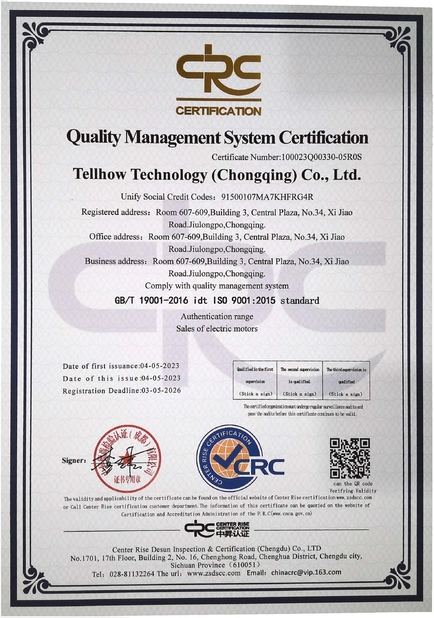
인증
중국 Tellhow Technology (Chongqing) Co., Ltd. 인증
고객 검토
모터는 저소음으로 완전히 운영하고 비디오 원격 설치 안내 서비스가 우수합니다. 우리의 지도자들은 매우 충족합니다.

—— 미샤 글래더쉬첸코

공장은 기술에 대해 매우 혹독하고 심각하고, 우리의 사용 환경에 따라 모터에 대한 세부를 조정하기 위한 매우 과학적 제안을 할 수 있습니다. 이것은 매우 믿을 만한 회사입니다.

—— 최근 미사용 리즈키 아말리아

회사 블로그
Guide to Threephase Induction Motor Selection and Control
에 대한 최신 회사 뉴스 Guide to Threephase Induction Motor Selection and Control
The Three-Phase Induction Motor: Industrial Workhorse

Imagine a modern factory floor where various equipment operates efficiently, conveyor belts transport materials continuously, and robotic arms execute every movement with precision. The driving force behind these operations is likely the three-phase induction motor – the heart of industrial applications that provides reliable power. But how well do you understand this essential industrial tool? This article examines the working principles, selection criteria, control methods, and common applications of three-phase induction motors.

The Industrial Workhorse

Three-phase induction motors are widely used in industrial settings due to their simple construction, reliable operation, easy maintenance, and relatively low cost. They consist of two main components:

  • Stator: The stationary part of the motor, composed of a stator core and windings. The stator typically has three sets of windings, each corresponding to one phase, which generate a rotating magnetic field.
  • Rotor: The rotating part of the motor. Depending on construction, three-phase induction motors are classified as either wound-rotor or squirrel-cage motors. The squirrel-cage design is more common in industrial applications due to its simpler structure and easier maintenance.
The Meaning of "Induction": Understanding Speed

These motors are called "induction" motors because the rotor's rotational speed never matches the speed of the stator's rotating magnetic field (synchronous speed). The synchronous speed depends on the power supply frequency and the number of poles in the stator winding, while the rotor's actual speed varies with load. When load increases, speed decreases slightly; when load decreases, speed increases slightly. At no load, the speed comes closest to synchronous speed but never reaches it.

The synchronous speed of the rotating magnetic field is calculated as:

N = 120 × f / P

Where:

  • N: Synchronous speed of the rotating magnetic field (rpm)
  • f: Power supply frequency (Hz)
  • P: Number of poles in the stator winding

For example, a 2-pole motor has a synchronous speed of 3000 rpm at 50 Hz, while a 4-pole motor runs at 1500 rpm under the same conditions. The motor's speed variations under different loads can be observed through its torque-speed curve.

Control Methods: From Simple to Smart

Three-phase induction motors can be controlled through various methods depending on application requirements:

  • Direct-On-Line (DOL) Starting: The simplest method connects the motor directly to the power supply. While easy to implement, this approach creates high starting currents that may strain the power grid and doesn't allow speed control.
  • Variable Frequency Drive (VFD): Using an inverter enables precise speed and torque control by varying the power supply's frequency and voltage. VFDs are ideal for applications requiring frequent speed changes or strict starting current limits. Control methods include scalar control and higher-precision vector control.
  • Star-Delta Starting and Soft Starters: Both methods reduce starting current. Star-delta starting initially connects the motor windings in a star configuration to lower starting voltage, then switches to delta after startup. Soft starters gradually increase voltage to smooth the starting process.
Applications: Powering Modern Industry

Three-phase induction motors serve numerous industrial and commercial applications, including:

  • Fans and pumps for ventilation, cooling, water, and oil systems
  • Compressors for air and refrigeration systems
  • Conveyor belts in production lines and logistics systems
  • Machine tools such as lathes, milling machines, and grinders
  • Lifting equipment including cranes and elevators
  • Mixers for concrete, food processing, and other materials
Selection Criteria: Choosing the Right Motor

Selecting the appropriate three-phase induction motor is crucial for equipment performance, efficiency, and longevity. Key selection factors include:

  • Power: Must meet load requirements without causing overload or wasting energy
  • Speed: Should match load speed requirements, adjustable via gearboxes or VFDs
  • Voltage and Frequency: Must correspond to power supply specifications
  • Number of Poles: Determines synchronous speed based on application needs
  • Protection Rating: Should suit the operating environment (e.g., higher ratings for damp or dusty conditions)
  • Mounting Style: Must fit equipment configuration (horizontal, vertical, flange-mounted, etc.)
  • Efficiency: Higher efficiency reduces energy consumption and operating costs
  • Starting Method: Should minimize grid impact based on power capacity and load characteristics
  • Load Characteristics: Must match application requirements (constant torque, constant power, fan/pump loads, etc.)
Troubleshooting and Maintenance

Common operational issues include overheating, vibration, and noise. Potential causes and solutions:

  • Overheating: May result from overload, poor ventilation, or aging insulation. Check load capacity, clean motor surfaces, ensure proper fan operation, and replace windings if necessary.
  • Vibration: Often caused by bearing damage, rotor imbalance, or loose mounting bolts. Replace bearings, balance the rotor, and tighten all fasteners.
  • Noise: Typically stems from bearing failure, rotor rubbing, or fan blade deformation. Replace bearings, check rotor-stator clearance, and replace damaged fan blades.

Regular maintenance extends motor lifespan:

  • Clean motor surfaces regularly to maintain proper ventilation
  • Check and replenish bearing lubrication as needed
  • Tighten mounting bolts periodically
  • Test winding insulation resistance to prevent deterioration
Conclusion

Three-phase induction motors remain indispensable power sources in industrial applications. By understanding their operating principles, control methods, and applications – along with proper selection and maintenance techniques – users can effectively harness these industrial workhorses to provide reliable power for equipment and systems.

선술집 시간 : 2026-02-25 00:00:00 >> 블로그 목록
연락처 세부 사항
Tellhow Technology (Chongqing) Co., Ltd.

담당자: Mr. Alex Yip

전화 번호: +86 2386551944

회사에 직접 문의 보내기
Tellhow Technology (Chongqing) Co., Ltd.
3, 센트럴 플라자, No.34, 시 지아오 길을 건설하는 607-609. 충칭. 중국
전화 번호:86-155-23661144
모바일 사이트 개인 정보 정책 | 중국 좋은 품질 고전압 교류 전동기 협력 업체. © 2022 - 2026 Tellhow Technology (Chongqing) Co., Ltd.. All Rights Reserved.