logo
전화 번호:
Tellhow Technology (Chongqing) Co., Ltd.
저희 모터로 에너지를 절약하고 성공을 이루세요!
블로그

Guide to Designing Highspeed PMSM Motors for Industry

제가 지금 온라인 채팅 해요
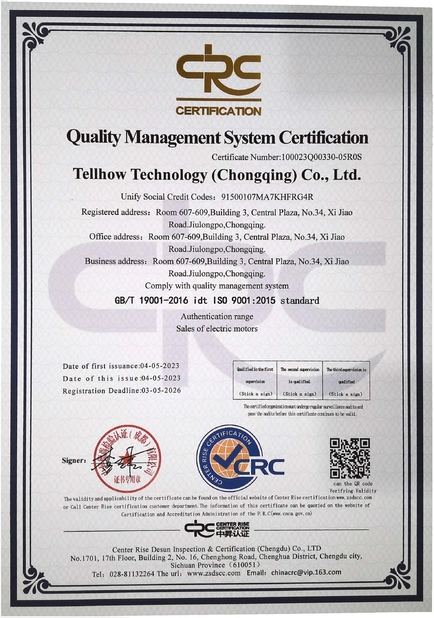
인증
중국 Tellhow Technology (Chongqing) Co., Ltd. 인증
고객 검토
모터는 저소음으로 완전히 운영하고 비디오 원격 설치 안내 서비스가 우수합니다. 우리의 지도자들은 매우 충족합니다.

—— 미샤 글래더쉬첸코

공장은 기술에 대해 매우 혹독하고 심각하고, 우리의 사용 환경에 따라 모터에 대한 세부를 조정하기 위한 매우 과학적 제안을 할 수 있습니다. 이것은 매우 믿을 만한 회사입니다.

—— 최근 미사용 리즈키 아말리아

회사 블로그
Guide to Designing Highspeed PMSM Motors for Industry
에 대한 최신 회사 뉴스 Guide to Designing Highspeed PMSM Motors for Industry
Designing a 10,000 RPM PMSM Motor

Imagine the possibilities enabled by a permanent magnet synchronous motor (PMSM) capable of stable operation at 10,000 revolutions per minute. From high-performance power tools to aerospace applications, high-speed PMSM motors demonstrate significant potential across various industries. However, achieving this goal presents substantial challenges involving electromagnetic design, mechanical engineering, and control strategies. This article provides comprehensive technical guidance for designing and manufacturing a 10,000 RPM PMSM motor, covering theoretical calculations to practical modifications.

Speed and Pole Count: The Frequency Equation

The fundamental relationship between motor speed and electrical parameters is defined by the synchronous speed formula:

Synchronous speed (rpm) = 120 × frequency (Hz) / pole count

This equation reveals that achieving 10,000 RPM requires careful optimization of the frequency-to-pole ratio. For instance, a 4-pole motor would require approximately 333.33 Hz input frequency. Such high-frequency operation necessitates specialized variable frequency drives (VFDs) or custom power supply systems.

Variable Frequency Drive Selection

Selecting an appropriate VFD represents a critical design consideration. The drive must deliver stable, high-frequency three-phase output while addressing several technical challenges:

  • Power losses from high-frequency switching
  • Electromagnetic interference mitigation
  • Control algorithm complexity
  • Power rating matching with motor requirements
Automotive Alternator Conversion: A Cost-Effective Approach

An innovative solution involves modifying automotive alternators, which are inherently designed for high-speed operation. Converting these devices into PMSM motors involves several key steps:

  • Rotor disassembly: Careful removal of the existing rotor assembly
  • Winding removal: Elimination of the field windings
  • Permanent magnet installation: Embedding ring-shaped or segmented permanent magnets into the rotor structure, with non-magnetic materials filling interstitial spaces
  • Reassembly and balancing: Precise rotor reconstruction followed by dynamic balancing tests

While this approach offers cost advantages through component reuse, it presents several technical challenges:

  • Precision machining requirements for magnet accommodation
  • Magnetic circuit optimization for proper flux distribution
  • Thermal management for high-speed operation
Electromagnetic Design Optimization

The electromagnetic design constitutes the core of PMSM development, requiring careful consideration of multiple factors:

  • Pole-slot combination: Affects torque characteristics, harmonic content, and cogging torque
  • Airgap flux density: Influences torque density and iron losses
  • Winding configuration: Impacts inductance, resistance, and back-EMF characteristics
  • Magnet material selection: Neodymium-iron-boron (NdFeB) alloys offer superior energy density but require thermal protection
Mechanical Design for High-Speed Operation

The mechanical architecture must withstand the extreme demands of 10,000 RPM operation:

  • Rotor integrity: High-strength materials and optimized geometry to resist centrifugal forces
  • Bearing selection: High-performance options including ball bearings, roller bearings, or magnetic bearings
  • Dynamic balancing: Critical for vibration and noise reduction
  • Thermal management: Advanced cooling solutions including heatsinks, forced air, or liquid cooling
Control System Implementation

Precise speed regulation requires sophisticated control methodologies:

  • Field-oriented control (FOC): Enables independent torque and flux control through accurate motor modeling
  • Direct torque control (DTC): Simplified approach with inherent torque ripple
  • Sensorless operation: Eliminates position sensors but reduces control precision
Simulation and Testing Protocols

Comprehensive validation through simulation and physical testing ensures design viability:

  • Electromagnetic simulation: Tools like ANSYS Maxwell and COMSOL Multiphysics predict performance characteristics
  • Prototype evaluation: Verification of speed, torque, efficiency, thermal performance, and vibration characteristics
Future Development Trends

The evolution of high-speed PMSM technology continues to advance through several key directions:

  • Increased rotational speeds through material and design innovations
  • Enhanced power density via thermal management improvements
  • Cost reduction through manufacturing process optimization

This technical exploration demonstrates that designing a 10,000 RPM PMSM motor requires multidisciplinary expertise spanning electromagnetic theory, mechanical engineering, and control systems. As technological advancements continue, high-speed PMSM motors will expand their role across industrial and commercial applications.

선술집 시간 : 2026-05-04 00:00:00 >> 블로그 목록
연락처 세부 사항
Tellhow Technology (Chongqing) Co., Ltd.

담당자: Mr. Alex Yip

전화 번호: +86 2386551944

회사에 직접 문의 보내기
Tellhow Technology (Chongqing) Co., Ltd.
3, 센트럴 플라자, No.34, 시 지아오 길을 건설하는 607-609. 충칭. 중국
전화 번호:86-155-23661144
모바일 사이트 개인 정보 정책 | 중국 좋은 품질 고전압 교류 전동기 협력 업체. © 2022 - 2026 Tellhow Technology (Chongqing) Co., Ltd.. All Rights Reserved.