logo
전화 번호:
Tellhow Technology (Chongqing) Co., Ltd.
저희 모터로 에너지를 절약하고 성공을 이루세요!
블로그

Guide to DC Motors Principles and Applications Explained

제가 지금 온라인 채팅 해요
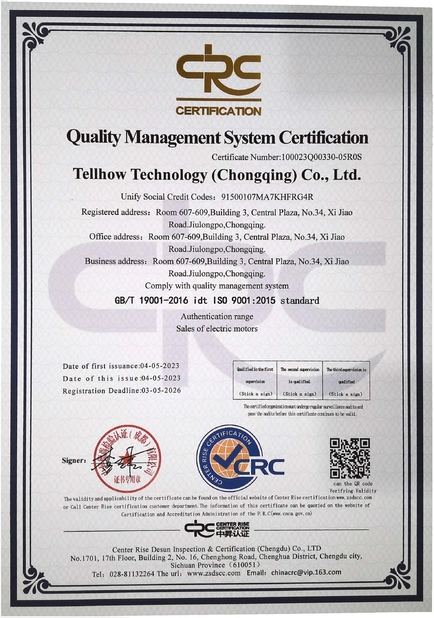
인증
중국 Tellhow Technology (Chongqing) Co., Ltd. 인증
고객 검토
모터는 저소음으로 완전히 운영하고 비디오 원격 설치 안내 서비스가 우수합니다. 우리의 지도자들은 매우 충족합니다.

—— 미샤 글래더쉬첸코

공장은 기술에 대해 매우 혹독하고 심각하고, 우리의 사용 환경에 따라 모터에 대한 세부를 조정하기 위한 매우 과학적 제안을 할 수 있습니다. 이것은 매우 믿을 만한 회사입니다.

—— 최근 미사용 리즈키 아말리아

회사 블로그
Guide to DC Motors Principles and Applications Explained
에 대한 최신 회사 뉴스 Guide to DC Motors Principles and Applications Explained

In the vast landscape of modern industrial systems, electric motors are ubiquitous. From precision micro-robots to heavy equipment driving production lines, motors serve as the core driving force behind industrial automation and electrification. Among various motor types, DC motors play an irreplaceable role in specific applications due to their unique performance characteristics and long development history.

Chapter 1: Historical Evolution and Development Trends

The concept of DC motors didn't emerge overnight but evolved through extensive exploration. Early prototypes in the 1830s-1840s, like Faraday's motor, were limited by battery technology. The late 19th century saw commercialization with power grid establishment and rechargeable battery invention.

Key Developments:
  • Brushed DC Motors: Dominated the field with simple structure and wide speed range but suffered from brush wear issues.
  • Brushless DC Motors (BLDC): Emerged with electronic commutation technology, offering higher efficiency and reliability.
  • Future Trends: Moving toward intelligent systems with self-diagnosis capabilities, higher efficiency through material innovation, and customized solutions for diverse applications.
Chapter 2: Working Principles

The operation of DC motors centers on the interaction between magnetic fields and electric current through two primary components:

Core Components:
  • Stator: Generates a stationary magnetic field using either permanent magnets or electromagnetic windings.
  • Rotor: Contains winding coils that produce a magnetic field when energized.
  • Commutator: Acts as a precision switch to reverse current direction in rotor windings, enabling continuous rotation.
Chapter 3: Application Scenarios

Despite competition from other motor types, DC motors maintain critical roles in:

  • Heavy Equipment: Cranes benefit from high starting torque and precise speed control.
  • Automation Systems: Conveyors in production lines achieve accurate material handling.
  • Fluid Systems: Pumps for agricultural irrigation and industrial cooling applications.
  • Automotive: Starter motors for internal combustion engines.
Chapter 4: Classification by Excitation Method

DC motors are categorized based on field winding configuration:

  • Permanent Magnet: Simple structure with high efficiency but limited field strength.
  • Series Wound: High starting torque but poor speed regulation.
  • Shunt Wound: Excellent speed stability with moderate starting torque.
  • Compound Wound: Combines advantages of series and shunt configurations.
Chapter 5: Comparative Analysis with AC Motors

Key differences between DC and AC motor technologies:

  • Performance: DC motors excel in speed control and starting torque, while AC motors offer simpler maintenance.
  • Reliability: Brush wear makes DC motors less durable than brushless AC alternatives.
  • Application Fit: DC motors suit precision speed control needs, whereas AC motors dominate general-purpose applications.
Chapter 6: Selection Methodology

Motor selection requires comprehensive evaluation of:

  • Load characteristics (torque, speed, power requirements)
  • Operating environment (temperature, humidity, corrosive elements)
  • Control requirements (speed regulation, positioning accuracy)
  • Lifecycle cost analysis (purchase, installation, maintenance)
Chapter 7: Emerging Technologies

Innovations shaping motor technology's future:

  • Permanent Magnet Synchronous Motors (PMSM): High-efficiency solution for electric vehicles and robotics.
  • Switched Reluctance Motors (SRM): Rugged, cost-effective alternative for harsh environments.
  • Hub Motors: Integrated wheel propulsion systems revolutionizing electric mobility.
  • Smart Motor Systems: Incorporating IoT capabilities for predictive maintenance.

DC motors remain vital components in industrial systems despite evolving technologies. Understanding their operational principles, performance characteristics, and application requirements enables optimal selection for specific use cases. As motor technology advances, new solutions continue to emerge, offering enhanced efficiency, reliability, and functionality across industrial applications.

선술집 시간 : 2026-06-25 00:00:00 >> 블로그 목록
연락처 세부 사항
Tellhow Technology (Chongqing) Co., Ltd.

담당자: Mr. Alex Yip

전화 번호: +86 2386551944

회사에 직접 문의 보내기
Tellhow Technology (Chongqing) Co., Ltd.
3, 센트럴 플라자, No.34, 시 지아오 길을 건설하는 607-609. 충칭. 중국
전화 번호:86-155-23661144
모바일 사이트 개인 정보 정책 | 중국 좋은 품질 고전압 교류 전동기 협력 업체. © 2022 - 2026 Tellhow Technology (Chongqing) Co., Ltd.. All Rights Reserved.