logo
전화 번호:
Tellhow Technology (Chongqing) Co., Ltd.
저희 모터로 에너지를 절약하고 성공을 이루세요!
블로그

Guide to Choosing Between 50hz and 60hz Generators

제가 지금 온라인 채팅 해요
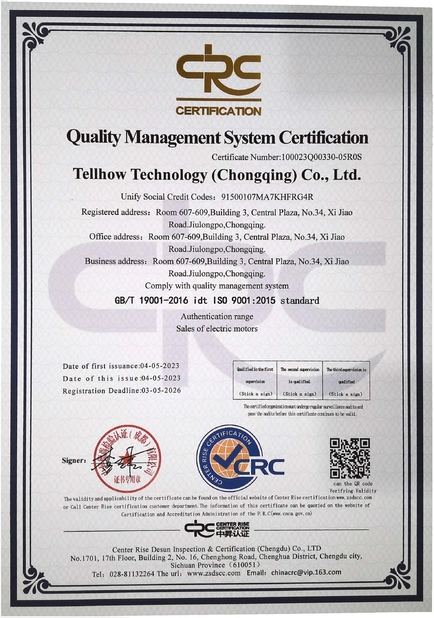
인증
중국 Tellhow Technology (Chongqing) Co., Ltd. 인증
고객 검토
모터는 저소음으로 완전히 운영하고 비디오 원격 설치 안내 서비스가 우수합니다. 우리의 지도자들은 매우 충족합니다.

—— 미샤 글래더쉬첸코

공장은 기술에 대해 매우 혹독하고 심각하고, 우리의 사용 환경에 따라 모터에 대한 세부를 조정하기 위한 매우 과학적 제안을 할 수 있습니다. 이것은 매우 믿을 만한 회사입니다.

—— 최근 미사용 리즈키 아말리아

회사 블로그
Guide to Choosing Between 50hz and 60hz Generators
에 대한 최신 회사 뉴스 Guide to Choosing Between 50hz and 60hz Generators

Electrical frequency standards vary globally, creating challenges for equipment selection and cross-border operations. This comprehensive analysis examines the technical principles, practical implications, and safety considerations surrounding 50Hz and 60Hz power systems.

I. Frequency Fundamentals: The "Heartbeat" of AC Power

Frequency, measured in Hertz (Hz), represents the number of complete alternating current (AC) cycles per second. This fundamental characteristic directly affects the operational speed of rotating electrical equipment through the relationship:

Synchronous Speed (n) = 120 × Frequency (f) ÷ Pole Count (p)

Where n is measured in rpm (revolutions per minute), f in Hz, and p represents the motor's pole count. A standard four-pole motor operating at 50Hz achieves 1500rpm, while the same motor at 60Hz reaches 1800rpm. Note that induction motors typically operate slightly below synchronous speed due to inherent slip.

II. Japan's Unique Frequency Divide: A Historical Perspective

Japan maintains a unique electrical infrastructure with 50Hz systems in Eastern regions and 60Hz in Western areas. This division originated during the Meiji era when Tokyo adopted German 50Hz equipment while Osaka implemented American 60Hz technology. The demarcation line roughly follows the Itoigawa-Shizuoka Tectonic Line.

Specialized frequency conversion stations (including Sakuma, Shin-Shinano, and Higashi-Shimizu facilities) bridge this divide, enabling power exchange between regions through advanced conversion technology.

III. Equipment Compatibility Considerations

Frequency variations significantly impact electrical device performance across several critical areas:

1. Motor-Driven Equipment
  • Frequency increases elevate synchronous speed, affecting flow rates, noise levels, and power losses
  • Example: A 50Hz-designed fan operating at 60Hz may experience 20% higher speed, potentially causing excessive airflow, noise, and thermal stress
2. Frequency-Sensitive Devices
  • Legacy equipment including analog clocks and early UPS systems may malfunction with incorrect frequency input
3. Modern Inverter-Based Equipment
  • Contemporary devices with switch-mode power supplies or VFDs often support dual-frequency operation
  • Critical verification of nameplate specifications remains essential even for "universal" equipment
4. Generator Performance Characteristics
  • Conventional 60Hz generators typically operate at higher rotational speeds than 50Hz equivalents
  • Inverter generators maintain consistent output frequency regardless of engine speed through electronic conversion
IV. Generator Technology Overview
1. Synchronous Generators (Conventional)

Output frequency directly correlates with prime mover speed and pole configuration. A four-pole design requires 1500rpm for 50Hz or 1800rpm for 60Hz operation.

2. Inverter Generators

These units convert initial AC output to DC, then synthesize the desired frequency through solid-state inversion. While many support frequency switching, product-specific verification remains crucial.

V. Field Operation Checklist
  1. Verify Local Frequency: Consult regional maps or utility providers before deployment
  2. Equipment Specification Review: Thoroughly examine nameplate ratings for voltage, frequency, power, and starting current requirements
  3. Generator Configuration: Properly set output frequency and ensure adequate capacity for motor starting currents
  4. Voltage Compatibility: Confirm alignment between equipment, cables, and power source specifications
  5. Frequency Conversion Assessment: Evaluate need for supplementary conversion equipment in cross-regional applications
Case Study: Frequency Mismatch Consequences

Situation: A Kanto-region (50Hz) event utilized western Japan (60Hz) specified blowers.

Outcome: Reduced rotational speed caused inadequate airflow and abnormal motor heating.

Resolution: Required either equipment replacement, inverter generator deployment, or dedicated frequency converter installation.

VI. International Operation Considerations

Global frequency standards vary regionally, with 50Hz predominating in Europe, China, and most Asian/African nations, while 60Hz systems prevail in North America and parts of the Middle East. Voltage standards present additional complexity with variations including 230/400V, 120/240V, and other configurations.

Key Recommendations:
  • Procure equipment matching destination specifications
  • Consider VFD applications for motor speed control
  • Verify compliance with local electrical regulations and certification requirements
VII. Frequently Asked Questions

Q: Can incorrect frequency damage generators?

A: Yes. Overload conditions, harmonic distortion, and regenerative energy can all contribute to equipment failure. Proper sizing and protective measures are essential.

Q: Is 50Hz equipment safe for 60Hz operation?

A: Generally not recommended. Rotating equipment may experience speed-related stress, while transformers face increased core losses. Resistive loads tolerate variation better, but nameplate specifications should always dictate usage.

Q: How does Japan interconnect its dual-frequency grid?

A: Through specialized conversion facilities that transform power between 50Hz and 60Hz standards, enabling cross-regional power transmission.

VIII. Equipment Selection Protocol
  1. Confirm local electrical parameters (frequency/voltage)
  2. Validate equipment specifications against requirements
  3. Configure generator output appropriately
  4. Include operational margin for starting currents
  5. Implement conversion solutions when necessary
  6. Ensure compliance with all applicable regulations
선술집 시간 : 2026-06-12 00:00:00 >> 블로그 목록
연락처 세부 사항
Tellhow Technology (Chongqing) Co., Ltd.

담당자: Mr. Alex Yip

전화 번호: +86 2386551944

회사에 직접 문의 보내기
Tellhow Technology (Chongqing) Co., Ltd.
3, 센트럴 플라자, No.34, 시 지아오 길을 건설하는 607-609. 충칭. 중국
전화 번호:86-155-23661144
모바일 사이트 개인 정보 정책 | 중국 좋은 품질 고전압 교류 전동기 협력 업체. © 2022 - 2026 Tellhow Technology (Chongqing) Co., Ltd.. All Rights Reserved.