logo
전화 번호:
Tellhow Technology (Chongqing) Co., Ltd.
저희 모터로 에너지를 절약하고 성공을 이루세요!
블로그

Explosion-Proof Motor Selection Guide for Hydrogen Applications

제가 지금 온라인 채팅 해요
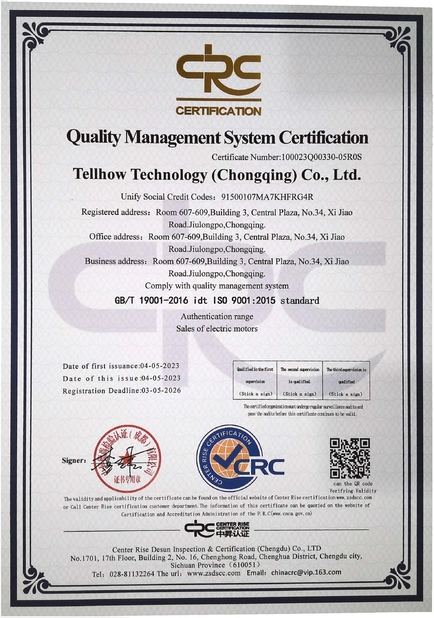
인증
중국 Tellhow Technology (Chongqing) Co., Ltd. 인증
고객 검토
모터는 저소음으로 완전히 운영하고 비디오 원격 설치 안내 서비스가 우수합니다. 우리의 지도자들은 매우 충족합니다.

—— 미샤 글래더쉬첸코

공장은 기술에 대해 매우 혹독하고 심각하고, 우리의 사용 환경에 따라 모터에 대한 세부를 조정하기 위한 매우 과학적 제안을 할 수 있습니다. 이것은 매우 믿을 만한 회사입니다.

—— 최근 미사용 리즈키 아말리아

회사 블로그
Explosion-Proof Motor Selection Guide for Hydrogen Applications
에 대한 최신 회사 뉴스 Explosion-Proof Motor Selection Guide for Hydrogen Applications
Explosion-Proof Motor Selection Guide for Hydrogen Applications: Safe Power Core for Hydrogen Refueling Stations and Electrolysis
1. The Safety Challenge Behind the Hydrogen Boom

By mid-2026, over 1,200 hydrogen refueling stations have been built globally, with China accounting for approximately 30%. However, hydrogen — the smallest molecule with an explosive range of 4%–75% — demands explosion protection far beyond traditional oil and gas applications.

In 2023, a hydrogen refueling station in South Korea suffered a flash fire caused by seal failure in the compressor motor. Hydrogen penetrated the bearing chamber and ignited at startup, partially destroying the station. Fortunately, no casualties were reported. The investigation identified inadequate consideration of hydrogen permeability and hydrogen embrittlement in motor selection.

2. Four Critical Challenges of Hydrogen Environments
2.1 Extreme Permeability

Hydrogen molecules measure just 0.289 nm in diameter — about 24% smaller than methane (0.38 nm). Conventional sealing structures are nearly ineffective against hydrogen. Even microscopic joint gaps can become leakage paths.

2.2 Extremely Low Lower Explosive Limit (4% v/v)

Compared to methane (5%) and propane (2.1%), hydrogen's 4% LEL means minimal leakage can reach dangerous concentrations. Explosion-proof motors must ensure internal potential ignition sources never connect with the external hydrogen atmosphere under any operating condition.

2.3 Hydrogen Embrittlement

Hydrogen atoms can penetrate metal crystal lattices, reducing material toughness and accelerating crack propagation. Rotor materials, especially copper alloys, may suffer fatigue fracture after prolonged exposure to hydrogen-rich environments.

2.4 Wide Temperature Range

Compressor discharge temperatures at hydrogen stations can reach 80–100°C, while electrolysis environments may involve alkaline mist (KOH solution). Motors must withstand both high temperatures and chemical corrosion.

3. The Ex d IIC T4 Flameproof Solution

For hydrogen applications, the recommended marking is:

Ex d IIC T4 Gb

Parameter Meaning Significance for Hydrogen
Ex d Flameproof enclosure Flame path ≥ 25 mm, gap ≤ 0.04 mm, prevents internal explosion propagation
IIC Suitable for hydrogen MESG ≤ 0.5 mm, meets hydrogen requirements
T4 Max surface temp 135°C Well below hydrogen autoignition temp (560°C)
4. Key Technical Measures
4.1 Ultra-Precision Flameproof Joints
  • Flange joint gap controlled to ≤ 0.04 mm​ (IEC 60079-1 requires ≤ 0.04 mm for IIC)
  • Joint width ≥ 25 mm, surface roughness Ra ≤ 1.6 μm
  • All fasteners: 316L stainless steel​ to prevent hydrogen embrittlement thread failure
4.2 Non-Copper Rotor
  • Rotor conductor: cast aluminum or high-strength aluminum alloy​ — eliminates copper hydrogen embrittlement risk entirely
  • End ring and bars cast as one piece, eliminating weld joint weak points
  • Rotor surface passivated​ to further reduce hydrogen permeation rate
4.3 Double Mechanical Seal + Nitrogen Purge System
  • Two mechanical seals (silicon carbide vs. silicon carbide) at each end of bearing chamber
  • Intermediate cavity purged with dry nitrogen​ (0.1–0.3 bar positive pressure)
  • Nitrogen consumption ≤ 5 L/min, compatible with plant nitrogen network
  • Leak detection: hydrogen sensor with threshold set at 1% v/v​ (25% of LEL)
4.4 Hydrogen-Resistant Terminal Box
  • Terminal box: cast aluminum alloy + epoxy resin potting​ to eliminate cavities
  • Cable entry: double-layer sealed gland, inner and outer layers independently sealed
  • Terminals: silver-plated to prevent contact resistance increase in hydrogen atmosphere
5. Verified Test Data

Third-party lab simulation (4% hydrogen concentration, 1,000-hour continuous operation):

Test Item Standard Flameproof Motor This Hydrogen Motor Acceptance Criteria
Hydrogen leakage (joints) 0.08 mL/min Not detected (<0.001 mL/min) ≤ 0.01 mL/min
Rotor tensile strength loss (1000h) 12% (copper rotor) 1.5% (aluminum rotor) ≤ 5%
Mechanical seal leakage rate 0.5 mL/h 0.02 mL/h ≤ 0.1 mL/h
Insulation resistance (after humidity + H₂) 85 MΩ 520 MΩ ≥ 100 MΩ
6. Selection Recommendations
Application Recommended Model Key Features
H₂ station compressor (indoor) Ex d IIC T4 + N₂ purge Double mech seal, H₂ leak detection
Electrolysis plant Ex d IIC T4 + anti-corrosion coating Aluminum rotor, epoxy-potted terminal box
Hydrogen transport skid Ex d IIC T4 + compact design Integrated N₂ port, vibration-resistant base
선술집 시간 : 2026-07-14 09:07:58 >> 블로그 목록
연락처 세부 사항
Tellhow Technology (Chongqing) Co., Ltd.

담당자: Mr. Alex Yip

전화 번호: +86 2386551944

회사에 직접 문의 보내기
Tellhow Technology (Chongqing) Co., Ltd.
3, 센트럴 플라자, No.34, 시 지아오 길을 건설하는 607-609. 충칭. 중국
전화 번호:86-155-23661144
모바일 사이트 개인 정보 정책 | 중국 좋은 품질 고전압 교류 전동기 협력 업체. © 2022 - 2026 Tellhow Technology (Chongqing) Co., Ltd.. All Rights Reserved.