logo
전화 번호:
Tellhow Technology (Chongqing) Co., Ltd.
저희 모터로 에너지를 절약하고 성공을 이루세요!
블로그

Automation Control Synchronous Vs Asynchronous Motors Compared

제가 지금 온라인 채팅 해요
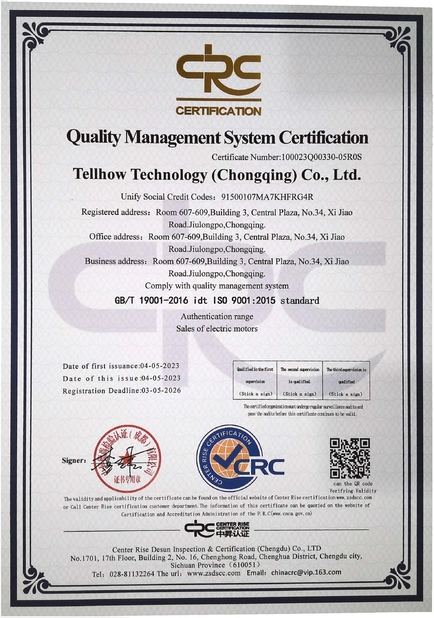
인증
중국 Tellhow Technology (Chongqing) Co., Ltd. 인증
고객 검토
모터는 저소음으로 완전히 운영하고 비디오 원격 설치 안내 서비스가 우수합니다. 우리의 지도자들은 매우 충족합니다.

—— 미샤 글래더쉬첸코

공장은 기술에 대해 매우 혹독하고 심각하고, 우리의 사용 환경에 따라 모터에 대한 세부를 조정하기 위한 매우 과학적 제안을 할 수 있습니다. 이것은 매우 믿을 만한 회사입니다.

—— 최근 미사용 리즈키 아말리아

회사 블로그
Automation Control Synchronous Vs Asynchronous Motors Compared
에 대한 최신 회사 뉴스 Automation Control Synchronous Vs Asynchronous Motors Compared

In the field of automation control engineering, synchronous and asynchronous motors play pivotal roles. While both serve as essential components in industrial systems, they exhibit fundamental differences in operation, performance characteristics, and practical applications. Understanding these distinctions is crucial for engineers when selecting motor types and optimizing control system performance.

Synchronous Motors: Precision and Efficiency

Synchronous motors derive their name from their defining characteristic: the rotor speed precisely synchronizes with the rotating speed of the stator's magnetic field. This unique feature makes them particularly suitable for applications requiring exact speed control, such as high-precision positioning systems, textile machinery, and certain industrial robots.

These motors typically employ either permanent magnets or excitation windings to generate the rotor's magnetic field. Engineers regulate torque and speed by controlling the stator current. Key advantages include high power factor, superior efficiency, and broad speed adjustment ranges.

Asynchronous Motors: Reliability and Versatility

Commonly known as induction motors, asynchronous motors operate differently—their rotor speed always lags slightly behind the stator field's rotation speed. Their operation relies on electromagnetic induction, where the stator's magnetic field induces current in the rotor windings, thereby generating torque.

Valued for their simple construction, lower cost, and high reliability, these motors find widespread use in industrial applications including fans, pumps, compressors, and various general-purpose machinery. However, they typically exhibit lower power factors and require special consideration for their high starting currents.

Key Technical Comparisons
  • Speed Control: Synchronous motors maintain fixed speed synchronization with power frequency, while asynchronous motors operate with inherent slip.
  • Excitation Method: Synchronous types require external excitation (permanent magnets or field windings), whereas asynchronous motors generate rotor current through induction.
  • Power Factor: Synchronous motors allow power factor adjustment through excitation current control, unlike their asynchronous counterparts.
  • Starting Characteristics: Asynchronous motors demand current-limiting measures during startup, while synchronous motors require auxiliary starting mechanisms.
  • Applications: Synchronous motors excel in precision applications, while asynchronous motors dominate general industrial uses where exact speed control isn't critical.
Modern Developments and Selection Criteria

Advancements in power electronics, particularly variable frequency drives (VFDs), have significantly enhanced the speed regulation capabilities of asynchronous motors, expanding their application scope. Meanwhile, new synchronous motor variants like permanent magnet synchronous motors (PMSM) gain traction in electric vehicles and servo drive systems due to their high efficiency and power density.

Selection between these motor types requires careful consideration of operational requirements, cost factors, reliability needs, and control system complexity. This decision-making process represents a fundamental skill for automation control engineers, who must balance technical specifications with practical application demands.

선술집 시간 : 2026-03-24 00:00:00 >> 블로그 목록
연락처 세부 사항
Tellhow Technology (Chongqing) Co., Ltd.

담당자: Mr. Alex Yip

전화 번호: +86 2386551944

회사에 직접 문의 보내기
Tellhow Technology (Chongqing) Co., Ltd.
3, 센트럴 플라자, No.34, 시 지아오 길을 건설하는 607-609. 충칭. 중국
전화 번호:86-155-23661144
모바일 사이트 개인 정보 정책 | 중국 좋은 품질 고전압 교류 전동기 협력 업체. © 2022 - 2026 Tellhow Technology (Chongqing) Co., Ltd.. All Rights Reserved.