logo
전화 번호:
Tellhow Technology (Chongqing) Co., Ltd.
저희 모터로 에너지를 절약하고 성공을 이루세요!
블로그

AC Motors Drive Industrial Efficiency Gains

제가 지금 온라인 채팅 해요
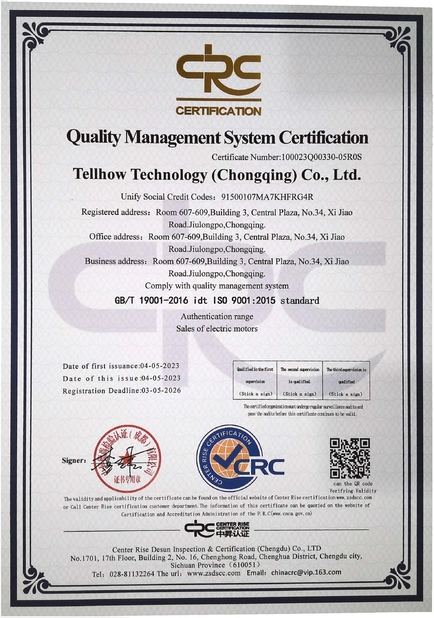
인증
중국 Tellhow Technology (Chongqing) Co., Ltd. 인증
고객 검토
모터는 저소음으로 완전히 운영하고 비디오 원격 설치 안내 서비스가 우수합니다. 우리의 지도자들은 매우 충족합니다.

—— 미샤 글래더쉬첸코

공장은 기술에 대해 매우 혹독하고 심각하고, 우리의 사용 환경에 따라 모터에 대한 세부를 조정하기 위한 매우 과학적 제안을 할 수 있습니다. 이것은 매우 믿을 만한 회사입니다.

—— 최근 미사용 리즈키 아말리아

회사 블로그
AC Motors Drive Industrial Efficiency Gains
에 대한 최신 회사 뉴스 AC Motors Drive Industrial Efficiency Gains

Imagine a factory floor where robotic arms move with precision, conveyor belts transport materials smoothly, and ventilation systems hum steadily—all powered by an often overlooked workhorse: the induction motor. Also known as asynchronous AC motors, these devices form the backbone of modern industrial automation, prized for their reliability, cost-effectiveness, and adaptability across applications ranging from light manufacturing to heavy machinery.

The Core Principle: Harnessing Electromagnetic Induction

Induction motors operate through a clever application of Faraday's Law of Electromagnetic Induction. When alternating current flows through the stator windings, it generates a rotating magnetic field that moves at synchronous speed—determined by the power supply frequency and motor pole count. The rotor (the rotating component) always turns slightly slower than this synchronous speed, giving rise to the "asynchronous" designation.

This speed difference induces current in the rotor windings, which in turn creates its own magnetic field. The interaction between these fields produces torque that drives rotation. This elegant mechanism—transferring energy without direct electrical connection—remains one of induction motors' most distinctive features.

Two Fundamental Types: Squirrel Cage vs. Wound Rotor

Induction motors primarily come in two configurations, each suited for different operational demands.

Squirrel Cage Motors: Industry's Reliable Workhorse

The squirrel cage design dominates industrial applications. Its rotor consists of conductive bars embedded in an iron core, short-circuited by end rings to form a cage-like structure. This simple, robust construction makes it the default choice for countless applications.

Advantages:

  • Simple, reliable construction: The absence of complex windings and external connections minimizes failure points.
  • Low maintenance: No brushes or commutators reduce upkeep requirements.
  • Adequate starting torque: Meets most industrial starting needs.
  • High efficiency: Delivers optimal performance at rated loads.

Limitations:

  • High inrush current: Startup currents can reach several times the rated current, potentially straining power grids.
  • Limited speed control: Traditional designs require variable frequency drives for effective speed regulation.

Wound Rotor Motors: The Heavy-Duty Specialist

Wound rotor models feature three-phase windings connected to external resistors via slip rings and brushes. Adjusting these resistors modifies starting torque and speed characteristics.

Advantages:

  • High starting torque: Ideal for applications requiring substantial initial force.
  • Superior speed control: Enables smooth speed adjustments through resistance modulation.
  • Reduced starting current: Minimizes power grid disturbances during startup.

Drawbacks:

  • Complex, costly construction: Additional components increase manufacturing expenses.
  • Higher maintenance: Slip rings and brushes require regular servicing.
  • Lower efficiency: External resistors introduce energy losses.

Operational Advantages: Why Industries Rely on Induction Motors

  • Exceptional durability: Minimal moving parts ensure long service life.
  • Cost efficiency: Competitive initial and maintenance expenses.
  • Environmental resilience: Performs reliably in harsh conditions including high temperatures, humidity, and dusty environments.
  • Standardization: Well-established designs simplify procurement and replacement.

Ubiquitous Applications: Powering Modern Industry

  • Pumps and fans: HVAC systems, water treatment plants, irrigation networks.
  • Compressors: Refrigeration units, pneumatic tools, gas pipelines.
  • Conveyor systems: Logistics centers, production lines, warehousing.
  • Machine tools: Metal cutting, grinding, drilling equipment.
  • Material handling: Cranes, hoists, elevators in construction and shipping.
  • Mixing equipment: Chemical processing, food production, pharmaceutical manufacturing.
  • Textile machinery: Spinning, weaving, dyeing operations.
  • Plastics processing: Injection molding, extrusion systems.

Speed Control Evolution: From Basic to Advanced

  • Variable frequency drives (VFDs): The predominant solution, offering wide-range, precise speed control with energy-saving benefits through frequency modulation.
  • Pole-changing: An older technique providing limited, stepped speed variations by altering winding configurations.
  • Rotor resistance control: An obsolete method for wound rotor motors, now largely supplanted by VFDs due to efficiency drawbacks.

Modern control strategies like vector control and direct torque control leverage power electronics and advanced algorithms to achieve unprecedented precision in demanding applications.

Future Directions: Efficiency, Intelligence, Sustainability

  • Enhanced efficiency: Ongoing improvements in materials, electromagnetic designs, and manufacturing techniques continue to reduce energy losses.
  • Smart capabilities: Integrated sensors and connectivity enable predictive maintenance, performance optimization, and remote monitoring.
  • Environmental considerations: Eco-friendly materials and noise/vibration reduction align with sustainable development goals.

While permanent magnet synchronous motors gain traction in premium applications due to superior efficiency and compact dimensions, induction motors maintain their dominance through cost advantages and proven reliability. Continued innovation ensures their enduring relevance in industrial automation.

선술집 시간 : 2026-04-21 00:00:00 >> 블로그 목록
연락처 세부 사항
Tellhow Technology (Chongqing) Co., Ltd.

담당자: Mr. Alex Yip

전화 번호: +86 2386551944

회사에 직접 문의 보내기
Tellhow Technology (Chongqing) Co., Ltd.
3, 센트럴 플라자, No.34, 시 지아오 길을 건설하는 607-609. 충칭. 중국
전화 번호:86-155-23661144
모바일 사이트 개인 정보 정책 | 중국 좋은 품질 고전압 교류 전동기 협력 업체. © 2022 - 2026 Tellhow Technology (Chongqing) Co., Ltd.. All Rights Reserved.